

 English / engels
  Dutch / nederlands
[All pictures of garden wildlife on this page are thumbnails. Click on any thumbnail for a large format to be displayed.]
Mammals are the highest developed form of life at the moment of evolution. Even humans are mammals. All mammals are warm-blooded creatures with bodies supported by an internal skeleton of bones and the whole phenomenon is packed in soft skin. The skin is usually covered with little to much hair. Except for a very small group of extremely primitive mammals they all give birth to physically fully developed young. After birth most young are fed by their mothers with milky substance. This milk is produced by the specialised glands referred to as mammas. The name of the group derives from the name of the glands. Mammals have truly conquered the world: most live on the ground level, but many are also capable of climbing up rocks and trees. Most are capable of swimming, while some, for instance whales and dolphins, fully returned to water. Being so successful in adaptation to the environment it is actually amazing that only a very small group of mammals learned how to fly (bats). The so called flying squirrels do not really fly but just glide in the air during the jump from high parts of the trees to lower parts.
Mammals vary from very small, such as shrews and mice, to extremely big, such as whales. Very common in many gardens are insectvores: rather small, primitive mammals that feed on insects, worms, woodlice and such. Shrews are probably in most gardens, but rarely noticed. The Hedgehog is a much better known visitor and much more popular too!
Mammals vary from very small, such as shrews and mice, to extremely big, such as whales. Very common in many gardens are insectvores: rather small, primitive mammals that feed on insects, worms, woodlice and such. Shrews are probably in most gardens, but rarely noticed. The Hedgehog is a much better known visitor and much more popular too!
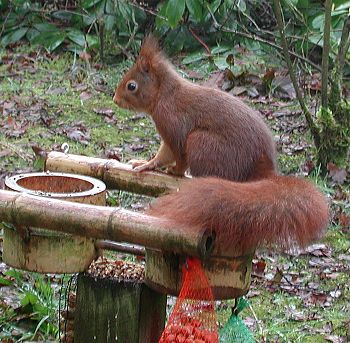
Red Squirrel (Sciurus vulgaris)
The real acrobat in many gardens and fascinating to observe: the European Red Squirrel. More...
The real acrobat in many gardens and fascinating to observe: the European Red Squirrel. More...
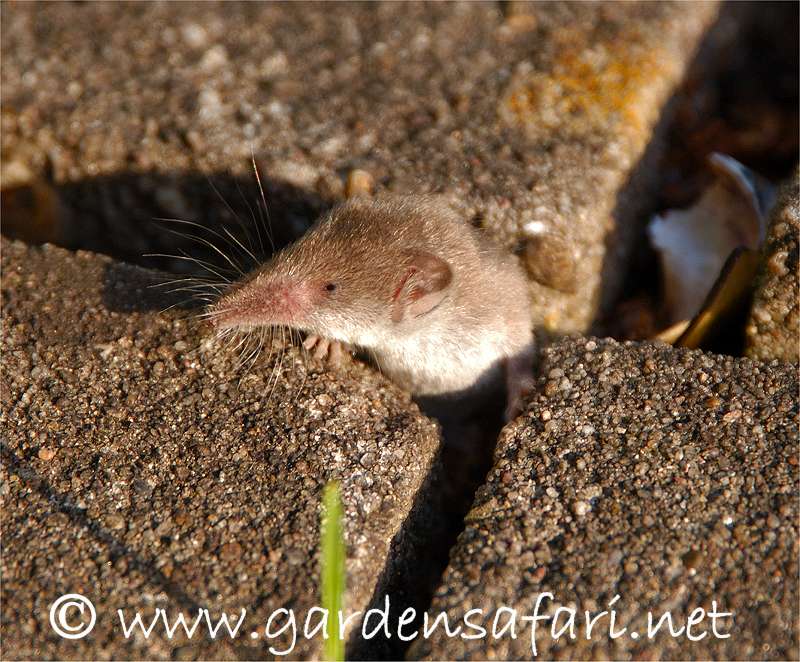
White-toothed Shrew (Crocidura russula)
Like the Hedgehog the The White-toothed Shrew is a nocturnal animal. It doesn't make as much noise and therefore it it less spotted. More...
Like the Hedgehog the The White-toothed Shrew is a nocturnal animal. It doesn't make as much noise and therefore it it less spotted. More...

Hedgehog (Erinaceus europaeus)
The hedgehog regularly turns up in gardens and shows little fear of humans.More...
The hedgehog regularly turns up in gardens and shows little fear of humans.More...
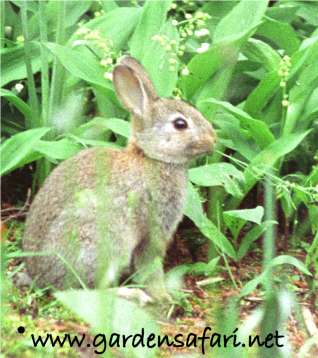
Rabbit (Oryctolagus cuniculus)
The rabbit is a cute creature, though a rather unwelcome visitor in the garden. More...
The rabbit is a cute creature, though a rather unwelcome visitor in the garden. More...

Brown Hare / European Hare / Eastern Jackrabbit (Lepus europaeus)
The Brown Hare is closely related to the Rabbit. Both belong to the family Leporidae but are of a different genus.More...
The Brown Hare is closely related to the Rabbit. Both belong to the family Leporidae but are of a different genus.More...

© Copyright 1998-2024 gardensafari.net (Hania Berdys)