|
|
[All pictures of garden wildlife on this page are thumbnails. Click on any thumbnail for a large format to be displayed.]

Wasps, Sawflies, Ants and Bees (Hymenoptera)
Within the hymenoptera are two groups of animals: the wasp like groups and the bee like groups. Wasps and ants are built in a typical way: they have the characteristic wasp waist. Sawflies and bees lack this characteristic. Bees usually are very hairy insects, while sawflies look like flies, but you can easily tell them apart. Sawflies have two pairs of wings (true flies have only one) and the antennae differ considerably from those of flies. There are many species world wide and a lot of them are very hard to identify. Especially within the enormous group of parasitic wasps and gall wasps many species are spitting images of one another.
Most of the Hymenoptera insects live in large or small colonies. These colonies are formed around a central animal, called the queen. In many cases the task of the queen is limited to laying eggs. Ants are very small and often live in the underground nests in huge colonies. Do not confuse ants with termites. These small insects that also live in colonies, usually reside in rotting wood and are not related to ants at all. In colonies of termites we always find a king besides the queen. In ants the males live for a few hours only and are part of the swarms we sometimes see leaving the nest. After mating with a queen the males die. Most hymenoptera, except for ants, are winged all their lives once adult. The difference between wasps, sawflies and ants on the one hand and bees on the other are the hairs. Bees are very hairy animals, while to the naked eye the others are bald.
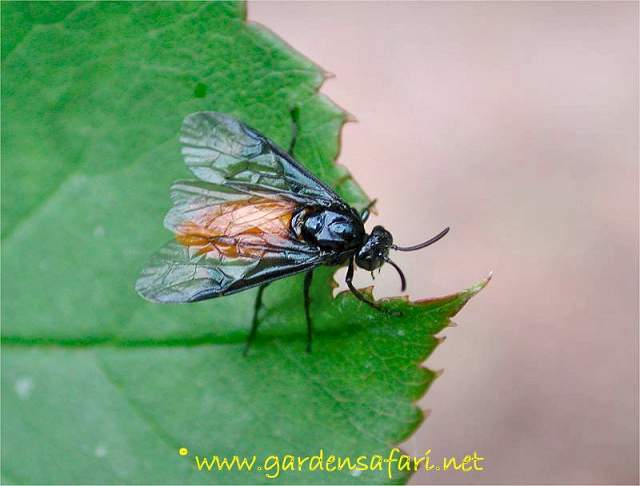
Sawflies (Symphyta)
In the Benelux alone there are well over 500 species of Sawflies. The larvae of sawflies are very similar to caterpillars and all are vegetarians. Most adult Sawflies are vegetarians as well, but some are hunters. Sawflies look like flies, for they lack the typical wasp waist. But contrary to flies, they have four wings. There are a number of bigger species, but many species are very small indeed. Sawflies can not sting people, for they have a saw and not a stinger. The saw is used to make a little cut in stems of plants. In this cut the eggs are being deposited.
Click here to select a species.
Yellow Jackets, Potter Wasps and Social Wasps (Vespidae)
Vespidae can be easily identified by the distinctive feature of having small wings. They are capable of folding their wings longitudinally when in rest. This also reveals a lot of their body, which usually is black with yellow or red lines or patches. These warning colours are for a reason for most species can sting painfully. The hornets and yellow jackets are the best known representatives of this group of wasps.
Click here to select a species.
Other wasps (various families)
The Yellow Jackets belong to a relatively small group of wasps. We deal with all other true wasps on this page. Some look a lot like yellow jackets, such as some digger wasps. Others are chiefly black and hunt for specific prey, such as the spider wasps. Comprised of well over 1,500 species in Holland alone the parasitic wasps make up the largest group. Some species are rather colourful. Parasitic wasps are notoriously difficult to identify! Usually each species has one or more doppelgangers.
Click here to select a species.
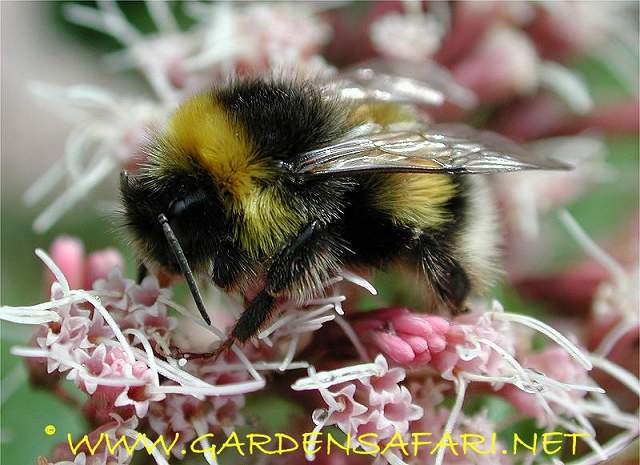
Bumblebees (Bombus)
Bumblebees are plump, extremely hairy bees. It is very easy to establish a bee is a bumblebee. Some species are readily identified, but be warned: many species are not as easy to identify as you might think. Besides queens and workers are different and so are the males. There are but few tropical species, for bumblebees are typical of the colder parts of the world. In the tropics we only find them in cooler regions, such as in higher mountains.
Click here to select a species.
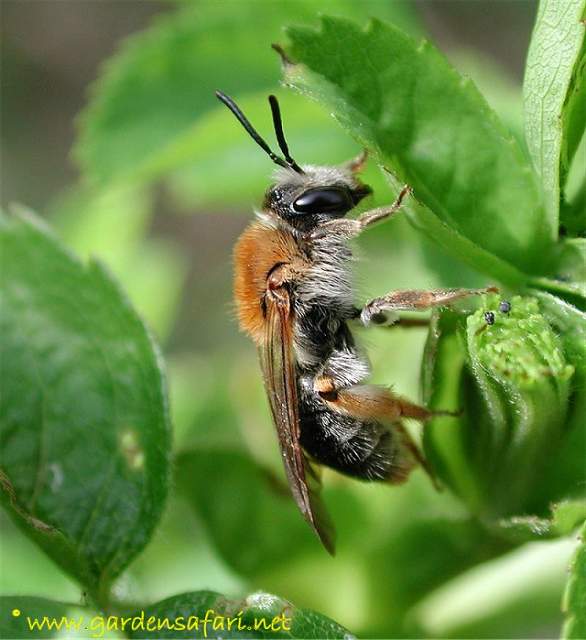
Mining Bees (Andrena)
Mining bees are similar to Honey bees, but they are usually more hairy, especially on the thorax. They are however never as hairy as Bumble bees are. Mining bees do not live in colonies, they are so-called solitary bees. Females dig a hole in usually sandy soil and make a nest at the end of the shaft. Even though solitary, females sometimes build nests at the same spot in huge numbers. Usually it is a challenge to identify different mining exactly. In Holland alone well over 70 species are present.
Click here to select a species.
All other Bees (various families)
On the following pages you will find all other bees on this site. Some are common and well known, such as the honey bee and the mason bees. Others are more obscure, such as the wasp bees. At times it is very difficult to tell species apart.
Click here to select a species.
Ants (Formicidae)
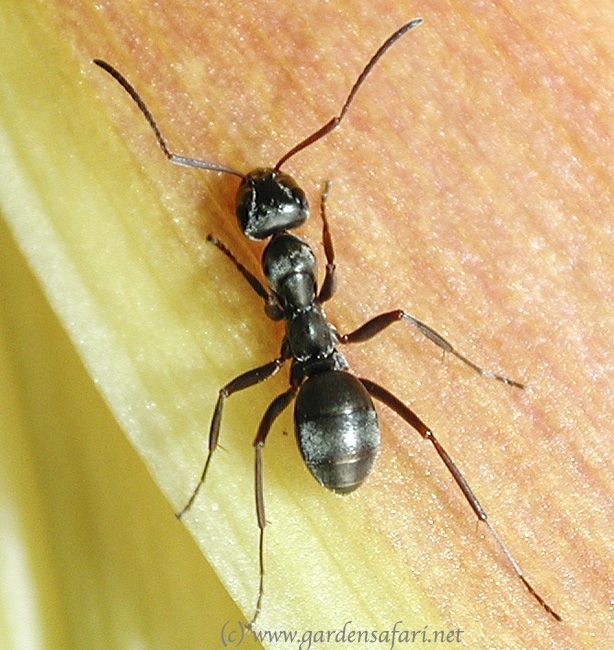
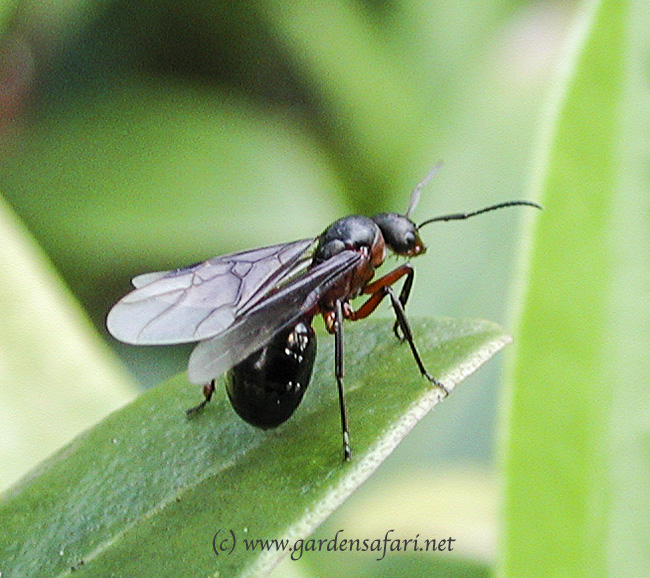
The family of ants is a very big family within the wasps. The number of animals is also very impressive. Ants live in colonies, many of which have a complicated structure with queens, workers and (winged) males. Some colonies have specialised workers, such as extra large animals protecting the colony (the so-called soldiers). Slavery, agriculture en cattle keeping are not uncommon and colonies also involve in wars with eachother! Identifying species often is a very complicated task.
Click here to select a species.
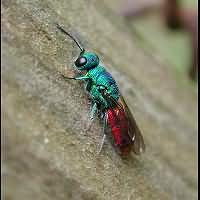
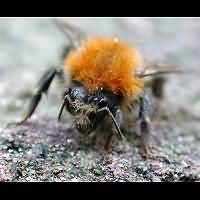
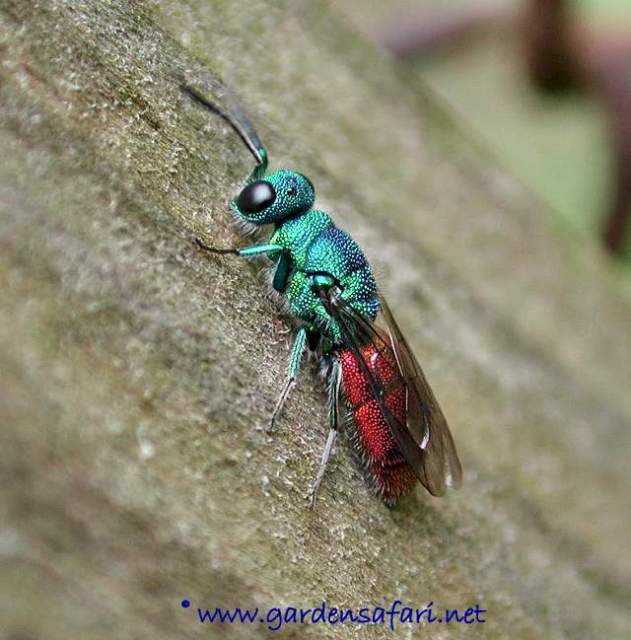
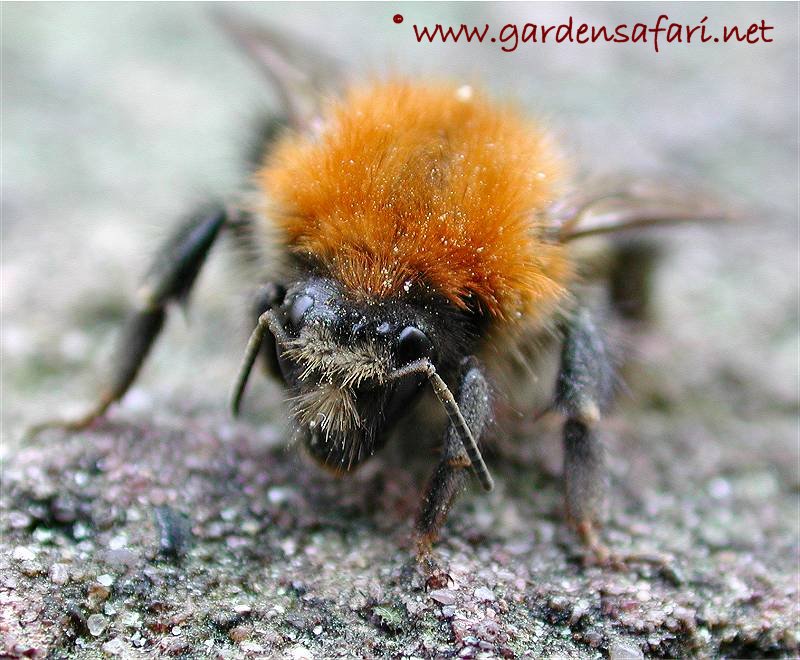
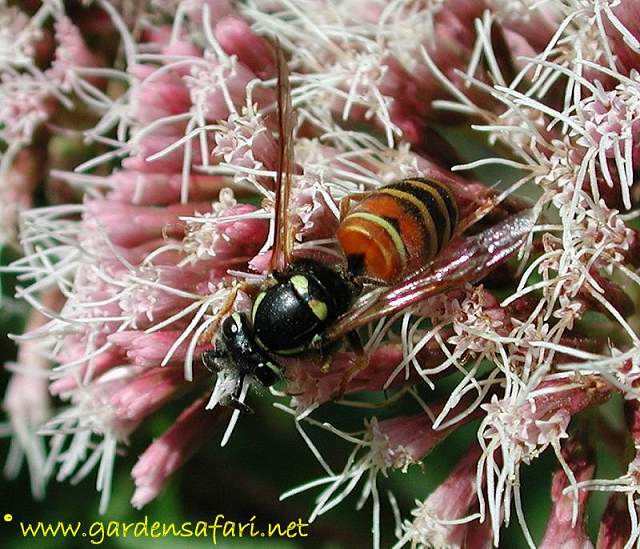
Wasps and ants, like the Cuckoo Bee to the right are hairless to the naked eye, while Bees are hairy and Bumble Bees, like the Common Carder Bee to the right, are extremely hairy.
Over 100,000 species of Hymenoptera are known to man. However many species are very small indeed, so scientists expect to find more species in the future. Hymenoptera have two pairs of wings. The wings are connected to oneanother by little hooks situated on the front wings. The hind wings are always a lot smaller than the front wings. The head of many of the Hymenoptera, especially the head of the Sawflies, rather give the impression to be square. On top of their head most hymenoptera have three so-called ocelli, primitive eyes that can only detect light and dark. The veins in the wings often make square like figures, a feature never found in the wings of other insects. Many wasps, like the yellowjackets or social wasps are constantly hunting for other insects. Even though they sometimes feed on these preys, usually all adult Hymenoptera are vegetarians, using the meat feeding their larvae only. The adults themselves mainly live on nectar, pollen, rotting fruit etc. The ants are the exception here: they eat both: green stuff and meat of all kinds. Hymenoptera go through all possible insect stages: egg-larva-pupa-adult. Most people think that opening an ants nest usually reveals the eggs. But it is more likely it's the pupae the animals are transporting deeper into the nest.
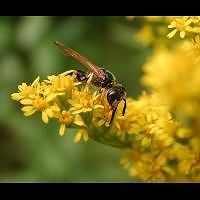
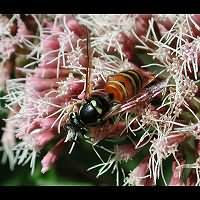
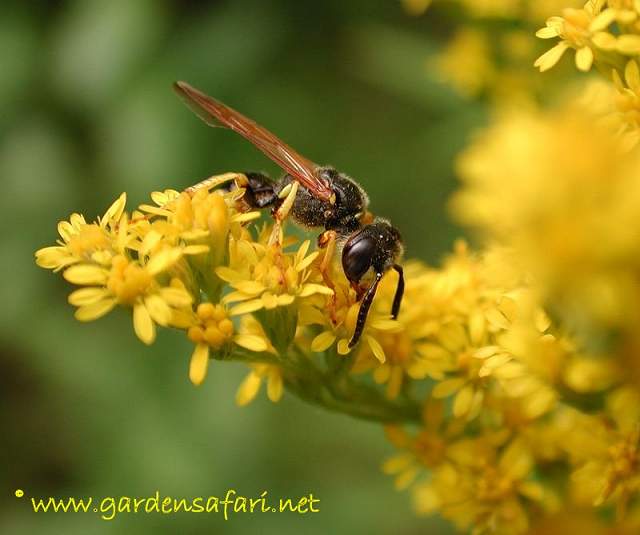
The larvae of both the Bee Wolf to the left and the Red Wasp to the right are fed with prey the adults catch. The adults themselves however are mainly vegetarians.
Hymenoptera are comprised of two groups od rather different animals: sawflies (Symphyta) and Wasps (Apocrita). Sawflies do look like flies, for they lack the constricted waist so typical of wasps. Often female sawflies have a long, clearly visible ovipositor used to deposit the eggs. This ovipositor looks like a little saw, hence the name of the group. The saw is used to cut into the stem or leaves of plants. The eggs are then deposited inside this cut. Most sawflies are big, robust animals. Because of their constriction and their size (many wasps are really small) the Apocrita always give a more vulnerable impression. Many of them have a visible ovipositor as well, but it is always long, thin and straight. The difference between the larvae of the two groups is also considerable. Sawflie larvae have to find all their food themselves. They are active and strong animals, fully developed with feet and everything, often looking very much like caterpillars, all of them being vegetarians. The larvae of the wasps are less developed, less active and in need of protection. And that is exactly what happens: their mothers do take good care of them, either by bringing them up inside a colonie, or bij providing them with a sheltered place and food to grow up in. Well known examples are the nests constructed by the social wasps or ants, or the small nests made by mason bees or digger wasps in the ground. Some small wasps deposit their eggs in plants, forcing the plant to produce a gall in which the larvae is more or less safe. The parasitic wasps simply lay their egg inside a host, which is then eaten from the inside by the larva.
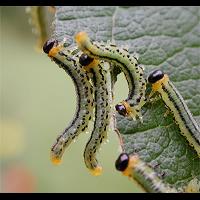
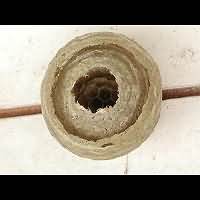
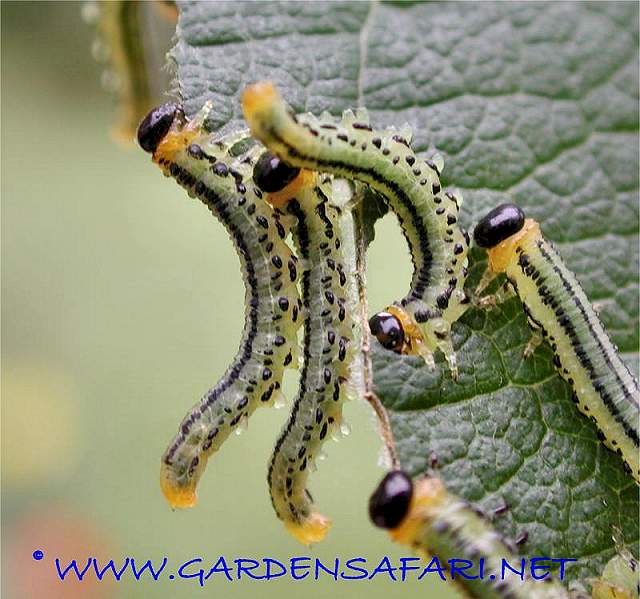
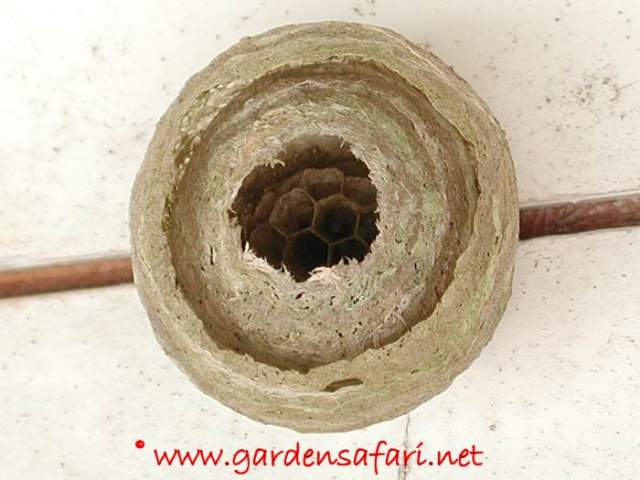
The larvae of sawflies, like the ones to the left, have to make it on their own, while wasps often make nests in which the larvae are protected, like the nest of the Saxon wasp to your right.
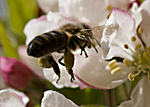
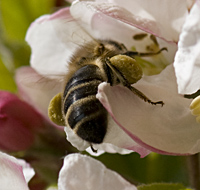
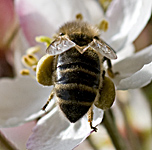
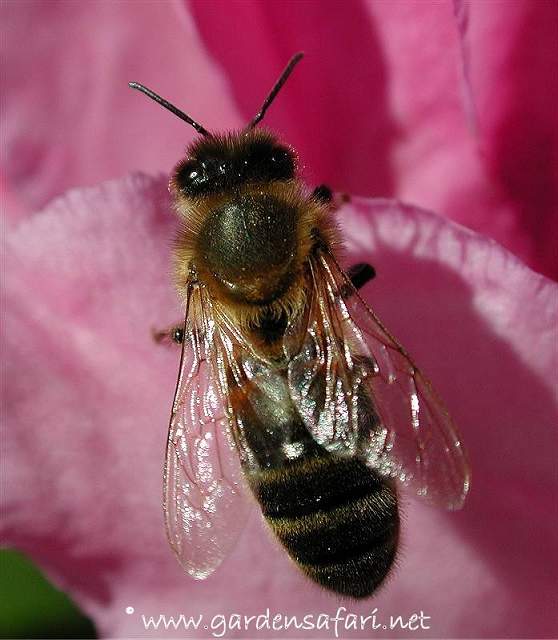
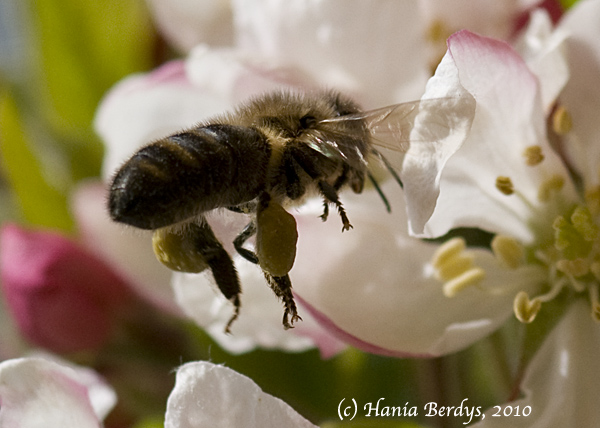
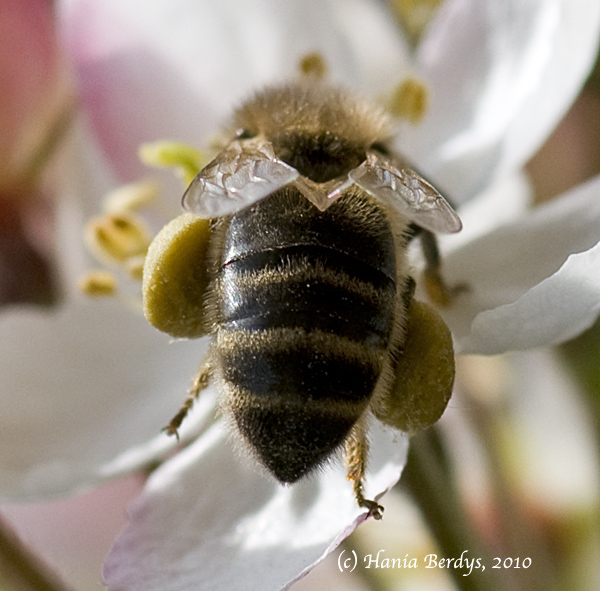
The above pictures show Honey Bees (Apis Mellifera) with pollen in their pouches attached to the legs. Due to their behaviour of hopping from flower to flower visiting thousands of flowers every day bees are excellent pollinators. Bee pollinating has always been the favourite way of securing or increasing the production of fruit and crops to every gardener and farmer.
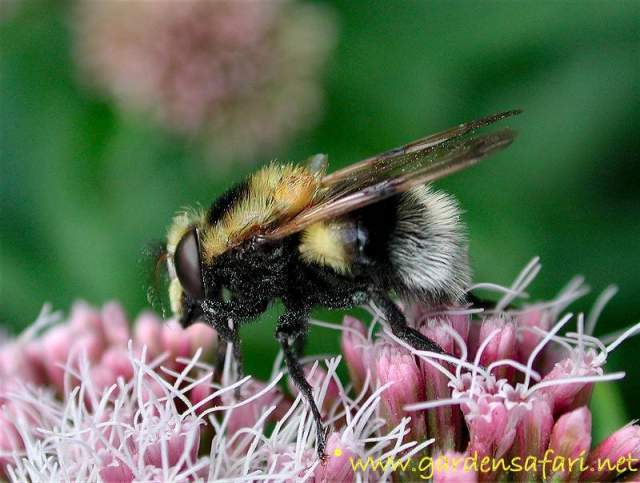
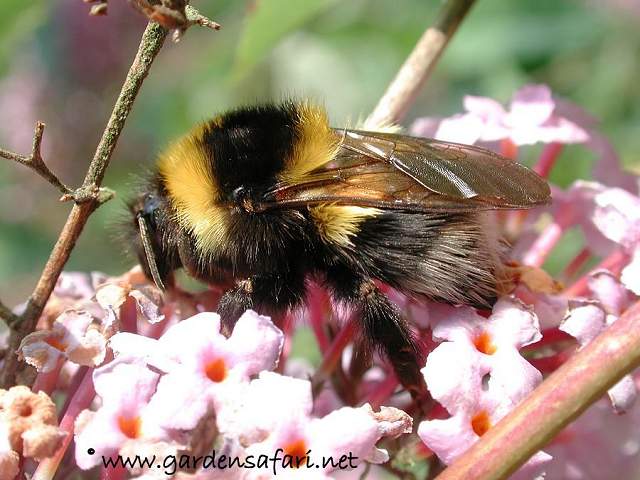
Most wasplike insects belong to the true wasps. This group is divided into two subgroups: the parasitic wasps, which do not sting, for they don't have one and the ones that are capable of stinging, like the social wasps, the bees and the ants. During the evolution though in many species the sting has become obsolete. The Red Wood Ant for instance is no longer able to sting. For its protection it bites. Immediately after the bite it sprays formic acid into the wound and that's what causing all the pain! More primitive ants, like the small Red Ant found in many gardens, are still able to sting painfully. Some stings, like the Honeybees, are barbed. In many cases the sting remains in the attackers body and that is why bees can only sting once and then die. All bee species, being strict vegetarians only use the sting to defend themselves, even though many have unbarbed stings. Wasps always have unbarbed stings. Thus they can sting you as many times as they like. They not only use their sting to defend themselves. They also attack other insects. These are killed or paralysed and used to feed the larvae. Wasps and bees are dangerous to most other animals. That is why they have striking colours, yellow and black or white and black mainly. This is to deter all other animals from eating them. Many animals, not possessing a sting at all, imitate wasps. Their enemies leave them alone as well. Harmless flies, such as many hover flies, have wasp or bee like colourings. Take for instance Volucella bombyland below: it is the spitting image of a bumble bee.
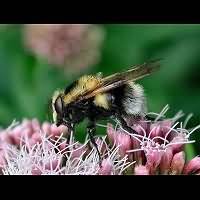
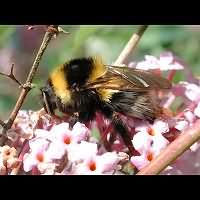
To the left the harmless hover fly and to the right the Garden Bumble Bee, which can give you a painful sting.
There are three groups of stinging wasps: the actual wasps, the bees and the ants. Actually the real difference between these groups is the food offered to the larvae. Wasp larvae are carnivores. Their mothers catch all kind of insects, which are transported to the nest. Bee larvae are strict vegetarians. Their mothers collect pollen and nectar for them to eat while growing up. Like their parents ant larvae are omnivorous: they will eat everything.Once adult almost all wasps and all bees are vegetarians. You can however also tell the difference by looking at the animals: wasps and ants are hairless to the naked eye, while bees are hairy animals. Wasps are winged all their lives, ants may be winged for a couple of hours, but usually are wingless.
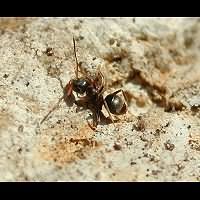
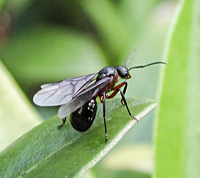
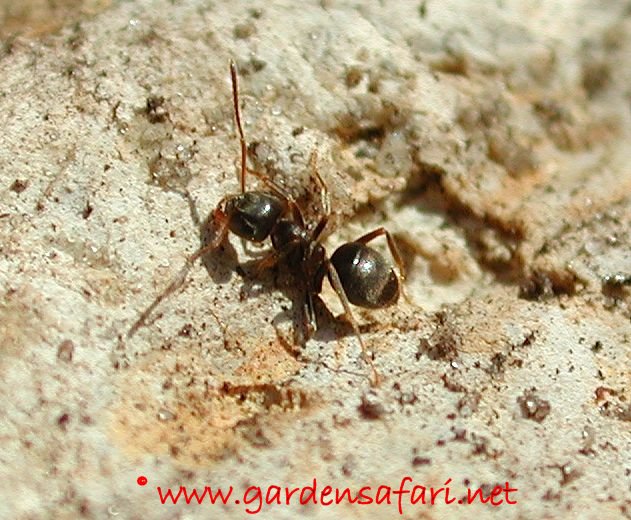
Wingless ants don't look like a wasp very much, but the winged individuals do.

|
|

 English / engels
  Dutch / nederlands