

 English / engels
  Dutch / nederlands
[All pictures of garden wildlife on this page are thumbnails. Click on any thumbnail for a large format to be displayed.]
Longhorn Beetles usually have long antennae and many species are quite colourful. There are many members in this family: some 15,000 species all over the world. In Western Europa alone some 100 species have been spotted. Longhorn Beetles usually do have very long horns, even though there are exceptions, of course. Many are also nicely coloured and they all give a slender impression. A few Longhorn species are very dangerous. Their larvae eat dead wood and do live inside pieces of wood in buildings. And because you can't see them (they do not make little holes like the woodworm does) and because they can live as larvae for some 5 to 7 years, it may be too late once you spot the adults. Most species however are not dangerous, but live in stems of plants or reet
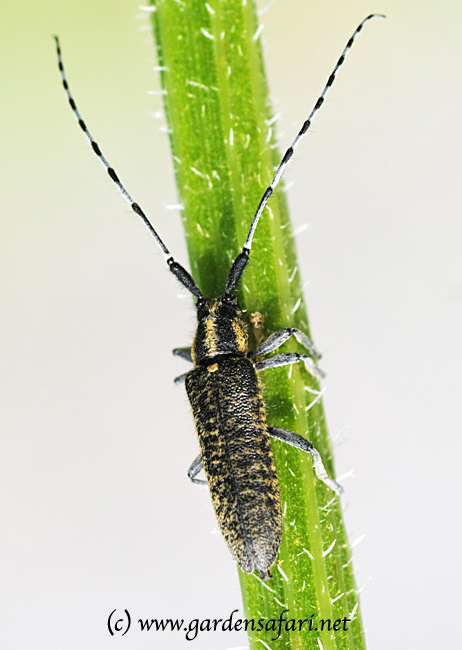
Golden-bloomed Grey Longhorn Beetle (Agapanthia villosoviridescens)
Agapanthia villosoviridescens is a beautiful Long Horn Beetle and common in gardens. More...
Agapanthia villosoviridescens is a beautiful Long Horn Beetle and common in gardens. More...
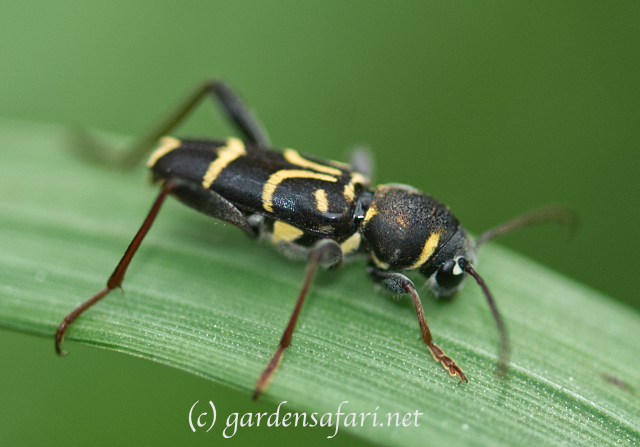
Xylotrechus antilope
This longhorn beetle has preference for foresty areas with oak and beech trees. More...
This longhorn beetle has preference for foresty areas with oak and beech trees. More...
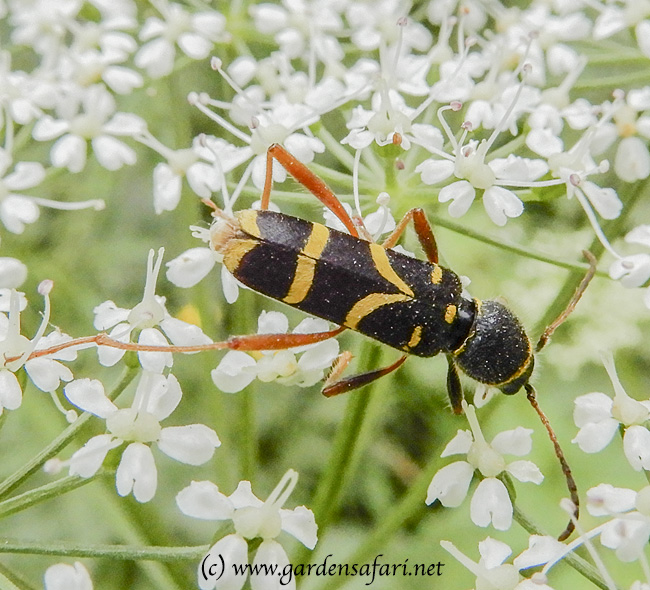
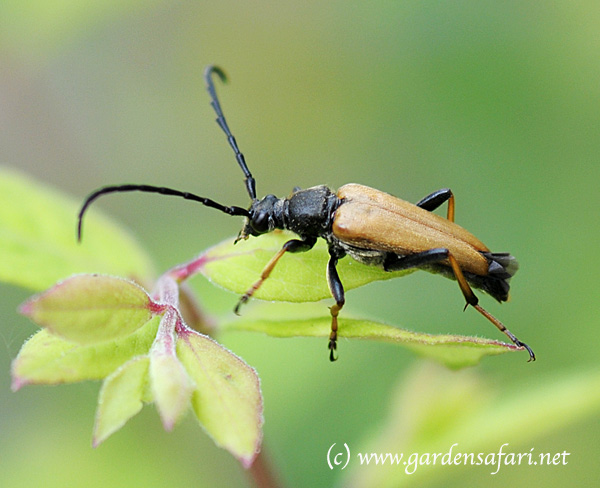
Red Longhorn Beetle (Corymbia rubra), male
The male of the Red Longhorn Beetle is ochrous brown and not red. The neck shield is black. More...
The male of the Red Longhorn Beetle is ochrous brown and not red. The neck shield is black. More...
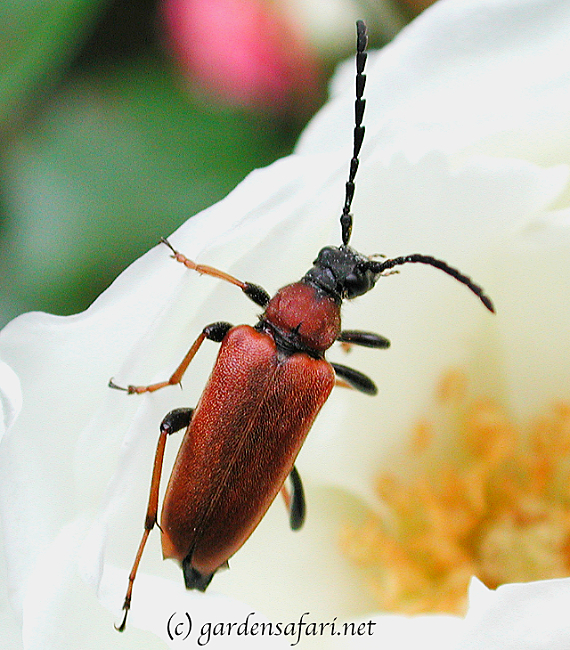
Red Longhorn Beetle (Corymbia rubra), female
The female of the Red Longhorn Beetle is brownish red, including her neck shield. More...
The female of the Red Longhorn Beetle is brownish red, including her neck shield. More...
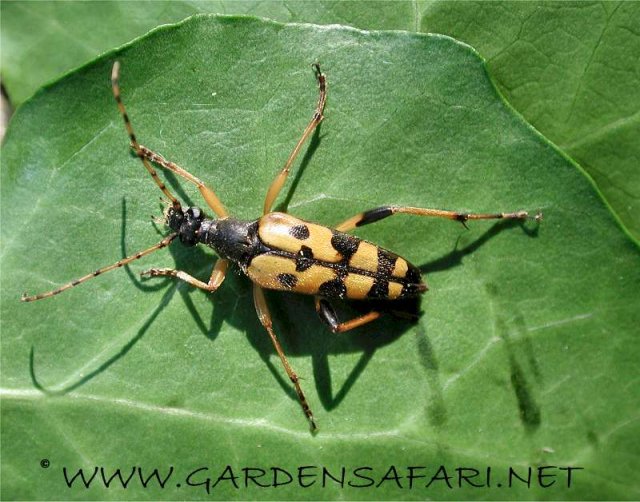
Spotted Longhorn (Leptura maculata)
Leptura maculata is a local species. But when present it may appear in great numbers. More...
Leptura maculata is a local species. But when present it may appear in great numbers. More...
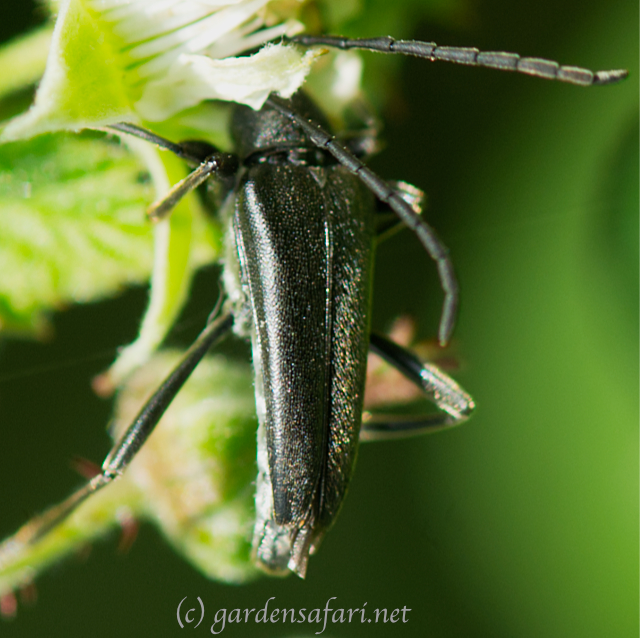
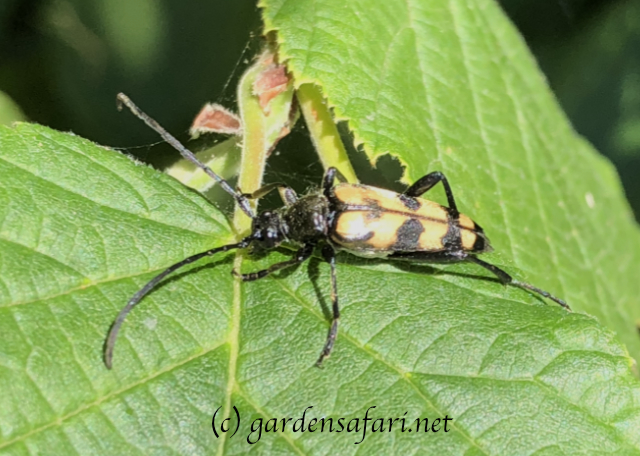
Four-banded Longhorn Beetle (Leptura quadrifasciata)
Leptura quadrifasciata has four more or less continuous transverse yellow bands. More...
Leptura quadrifasciata has four more or less continuous transverse yellow bands. More...
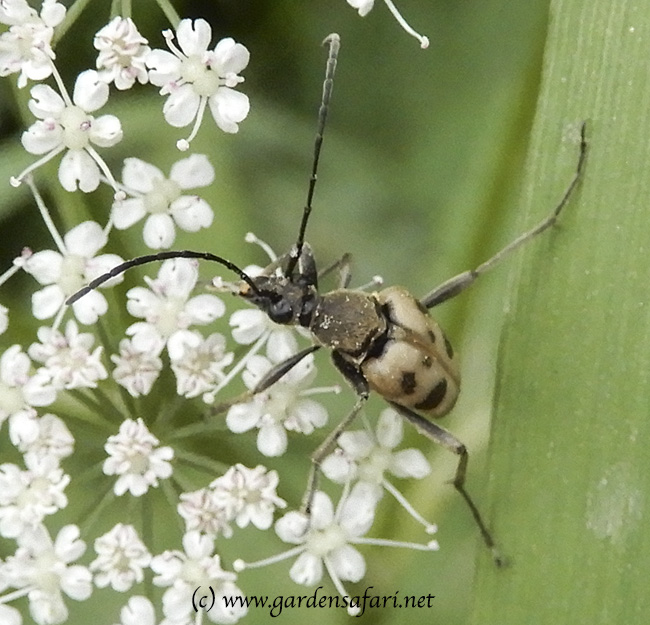
Pachytodes cerambyciformis
For a longhorn beetle Pachytodes cerambyciformis is rather small. More...
For a longhorn beetle Pachytodes cerambyciformis is rather small. More...
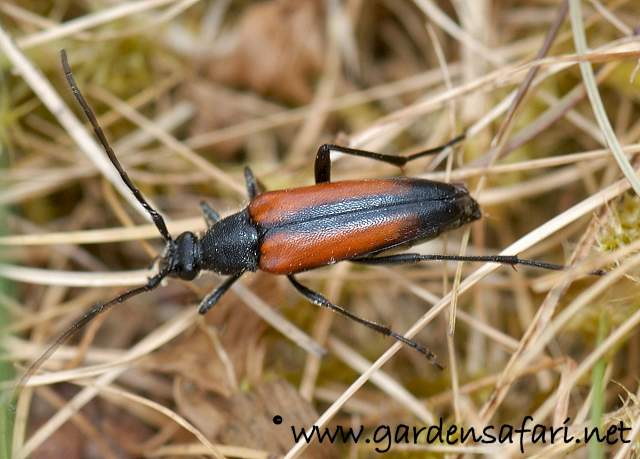
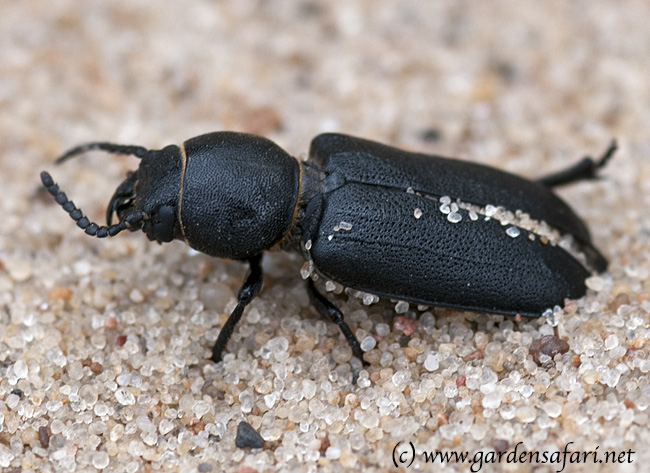
Black Longicorn Beetle (Spondylis buprestoides)
Spondylis buprestoides is a robust and convex species with a large head and huge mandibles. More...
Spondylis buprestoides is a robust and convex species with a large head and huge mandibles. More...
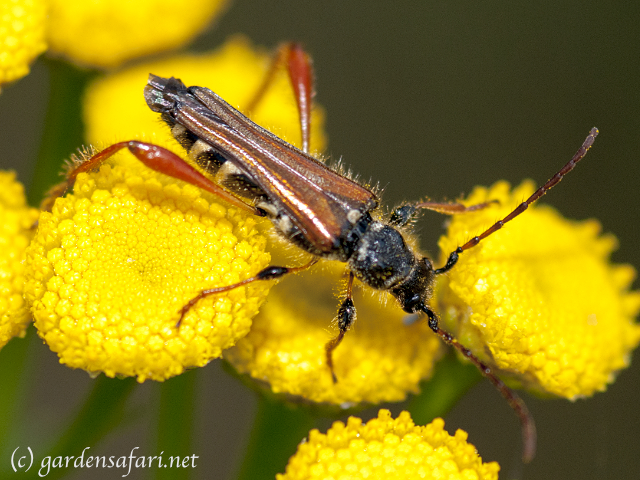
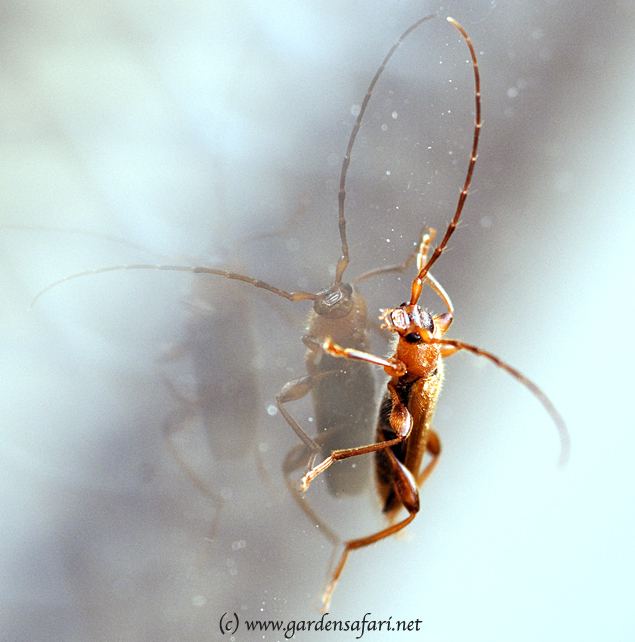
Violet Tanbark Borer (Phymatodes testaceus)
Phymatodes testaceus can be easily be mistaken for a Cantharis (especially Cantharis livida). More...
Phymatodes testaceus can be easily be mistaken for a Cantharis (especially Cantharis livida). More...
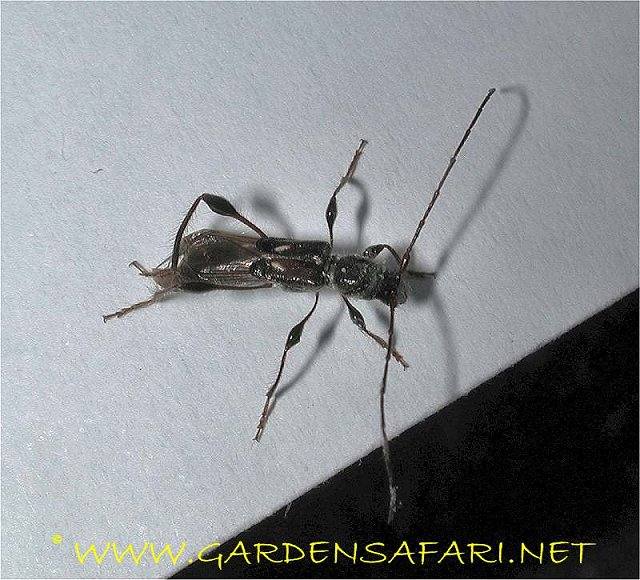
Spruce Shortwing Beetle (Molorchus minor)
The Spruce Shortwing Beetle is a most peculiar Longhorn Beetle. More...
The Spruce Shortwing Beetle is a most peculiar Longhorn Beetle. More...
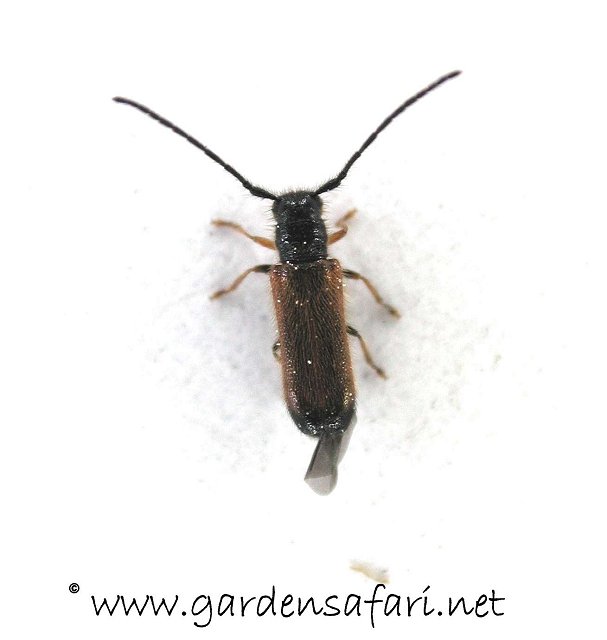
Plumb Beetle (Tetrops praeustus)
The Plumb Beetle is a small Longhorn Beetle. The larvae often live inside the twigs of plumb trees. More...
The Plumb Beetle is a small Longhorn Beetle. The larvae often live inside the twigs of plumb trees. More...
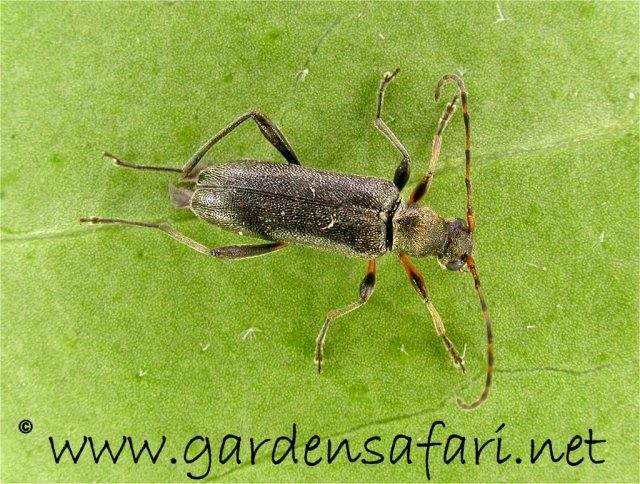
Grammoptera ruficornis
Grammoptera ruficornis is the most common Longhorn Beetle in Britain and Ireland. More...
Grammoptera ruficornis is the most common Longhorn Beetle in Britain and Ireland. More...

© Copyright 1998-2024 gardensafari.net (Hania Berdys)